
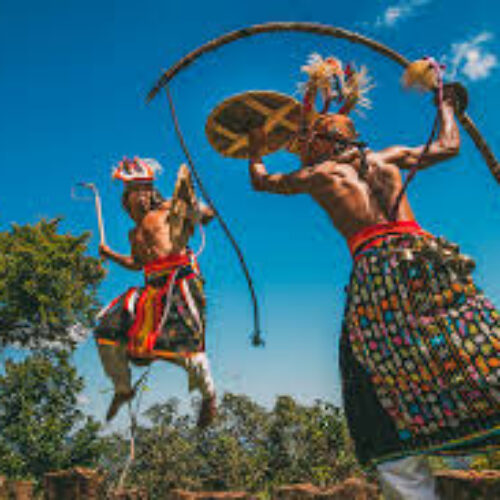
Caci: The Traditional Whip Fighting Dance of Manggarai
Caci: The Traditional Whip Fighting Dance of Manggarai
Introduction
Caci, an indigenous whip fighting dance from the Manggarai region on the island of Flores, Indonesia, is a
vibrant expression of local culture and tradition. This ritualistic dance not only serves as a form of
entertainment but also as a medium for resolving conflicts, celebrating harvests, and honoring ancestors.
Rich in symbolism and history, Caci is an integral part of Manggarai's cultural heritage. Historical
Background, Caci has been practiced for generations in Manggarai and is believed to have originated as a
martial exercise to prepare warriors for battle. Over time, it evolved into a ceremonial event that plays a
significant role in social and religious gatherings. Traditionally, Caci is performed during major festivals,
including Penti, a harvest festival that marks the beginning of a new agricultural cycle.
The Performance
Caci involves two male participants: one acting as the attacker, armed with a whip made from rattan, and
the other as the defender, equipped with a shield and a whip of his own for counter-attacks. The
participants wear traditional Manggarai attire, including a colorful sarong, a headgear called a "songke,"
and ornate accessories that add to the visual spectacle of the performance. The performance is
accompanied by the rhythmic beats of gongs and drums, which heighten the dramatic intensity. Each move
in the dance is symbolic and requires skill, agility, and courage. The attacker attempts to strike his
opponent with the whip, while the defender skillfully parries the blows with his shield. Points are scored
based on the accuracy and effectiveness of the strikes and defenses.
Symbolism and Cultural Significance
Caci is rich in symbolism, reflecting themes of bravery, honor, and masculinity. The whip represents
strength and agility, while the shield symbolizes protection and resilience. The performance is not merely a
test of physical prowess but also a demonstration of mental fortitude and strategic thinking. The dance also
serves as a social equalizer, allowing participants from different social backgrounds to compete on equal
footing. It fosters a sense of community and mutual respect among the participants and the spectators.
Modern Relevance
In contemporary times, Caci continues to be a vital part of Manggarai culture. It has gained wider
recognition and is often performed at cultural festivals and tourism events, attracting visitors from around
the world. The Indonesian government and cultural organizations have taken steps to preserve and
promote Caci as a significant cultural heritage of the nation. Efforts to document and teach Caci to younger
generations are ongoing, ensuring that this traditional art form remains alive and vibrant. Through these
initiatives, Caci not only serves as a cultural treasure of Manggarai but also as a symbol of Indonesia's rich
and diverse cultural tapestry.
Conclusion
Caci, the traditional whip fighting dance of Manggarai, is a captivating blend of artistry, tradition, and valor.
Its deep-rooted significance in the cultural and social fabric of Manggarai underscores the importance of
preserving such traditions for future generations. As Caci continues to be celebrated and performed, it
stands as a testament to the enduring spirit and heritage of the Manggarai people and the broader
Indonesian community.